Slow Travel in Puerto Viejo: Why Staying Longer Creates a Better Costa Rica Experience
Learn why spending more time in Puerto Viejo leads to a richer and more authentic Caribbean experience.
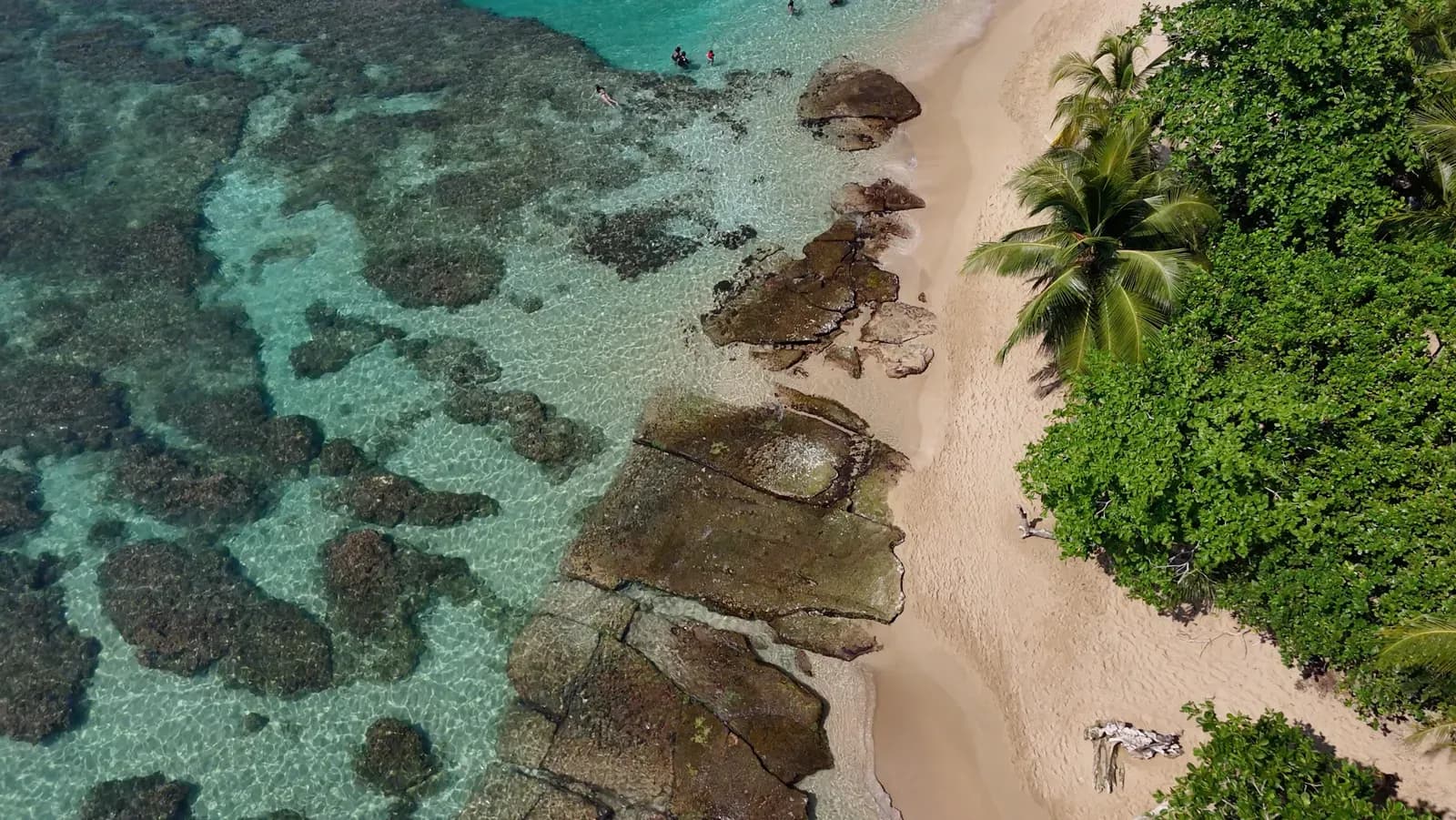
Most Costa Rica itineraries follow a familiar pattern: a couple of days in the cloud forest, a night near a volcano, a rushed afternoon on the Pacific coast, and a few hours on the Caribbean before flying home. The country gets ticked off the list. The experience, though, can feel fragmented.
Slow travel works from a different premise. Instead of covering as much ground as possible, you choose one place and stay long enough to really know it — to find a favorite breakfast spot, to learn which beach is quietest on a Tuesday morning, to watch the same stretch of coastline change with the weather and the tides.
Puerto Viejo de Talamanca, on Costa Rica's southern Caribbean coast, is one of the country's most rewarding destinations for this kind of trip. The town has the character, the natural setting, and the pace to make staying longer feel not just pleasant — but genuinely worthwhile.
What Is Slow Travel?
Slow travel means spending more time in fewer places. The goal isn't to cover the most ground — it's to cover the right ground deeply enough that the trip leaves a real impression. You might spend a week or two in a single base, exploring the surrounding area at your own pace instead of working through a dense itinerary.
Practically, it means lower logistical stress. No packing every few days. No four-hour bus transfers between destinations. No anxious mornings trying to reach a tour on time. Instead, a slower cadence: mornings with coffee, afternoons at the beach, evenings deciding whether to cook or walk to a restaurant.
- Staying 7 or more nights in one place rather than moving every 2–3 days
- Exploring on foot, by bicycle, or at an unhurried pace
- Eating at local places and shopping at neighborhood markets
- Leaving unscheduled time for spontaneous discoveries
- Prioritizing experience and atmosphere over a checklist of sights
Why Puerto Viejo Is Perfect for Slow Travel
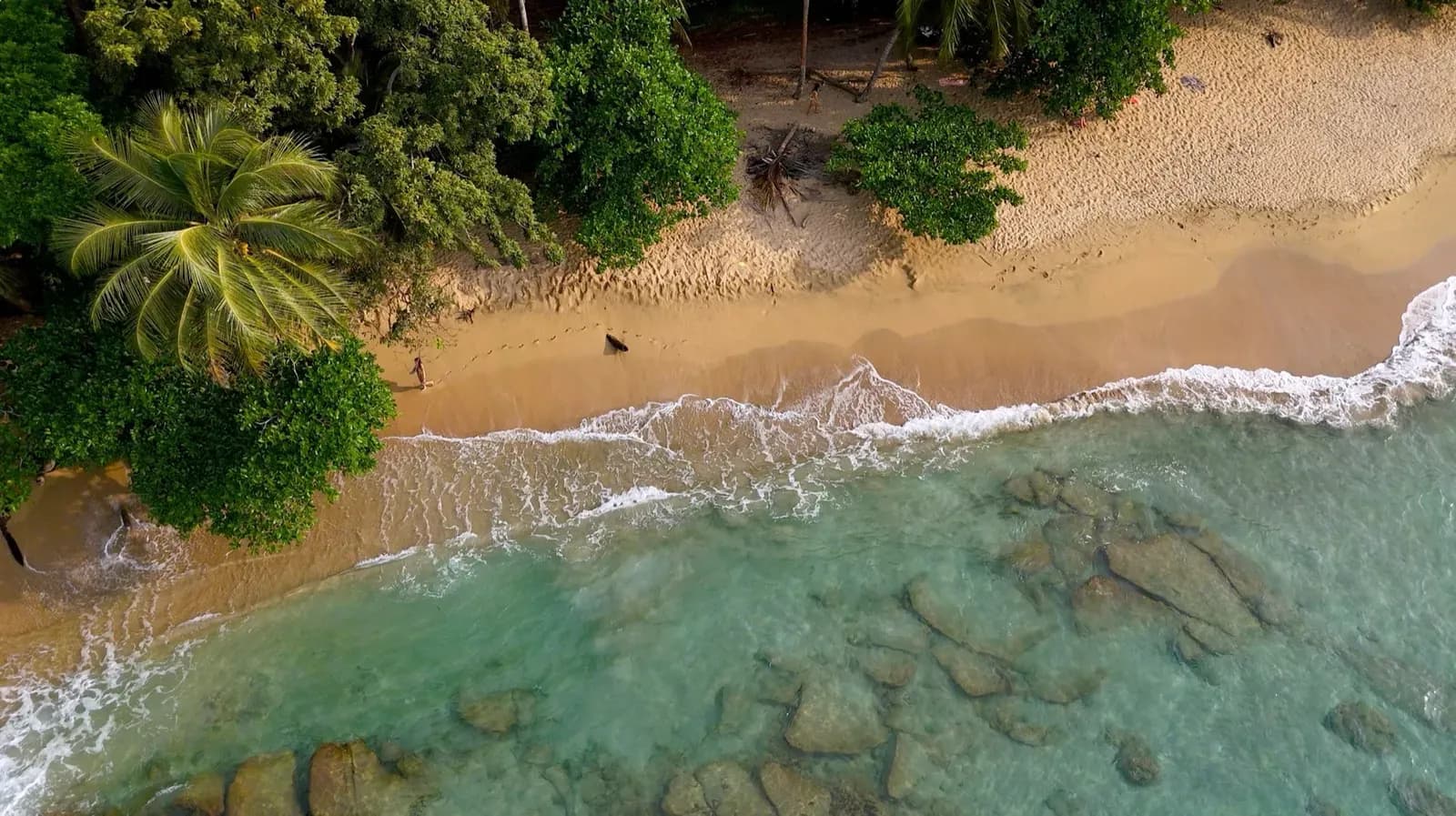
Puerto Viejo runs at its own pace — slower and more grounded than most beach destinations. The main road through town is lined with small restaurants, surf shops, and local businesses. Bicycles and pedestrians are more common than cars. The ocean is a few minutes away in almost every direction.
The setting does most of the work. A morning walk on the beach, an afternoon under a palm tree, the sound of the jungle at night — there's always something worth experiencing without going anywhere in particular. This is a coast that rewards presence over movement.
Many travelers who arrive planning to stay five days end up extending to ten. The combination of good weather for most of the year, a coastline with distinct beaches, a local culture that's genuinely welcoming, and very little pressure to keep moving makes it surprisingly easy to keep finding reasons to stay.
Every Beach Has Its Own Personality
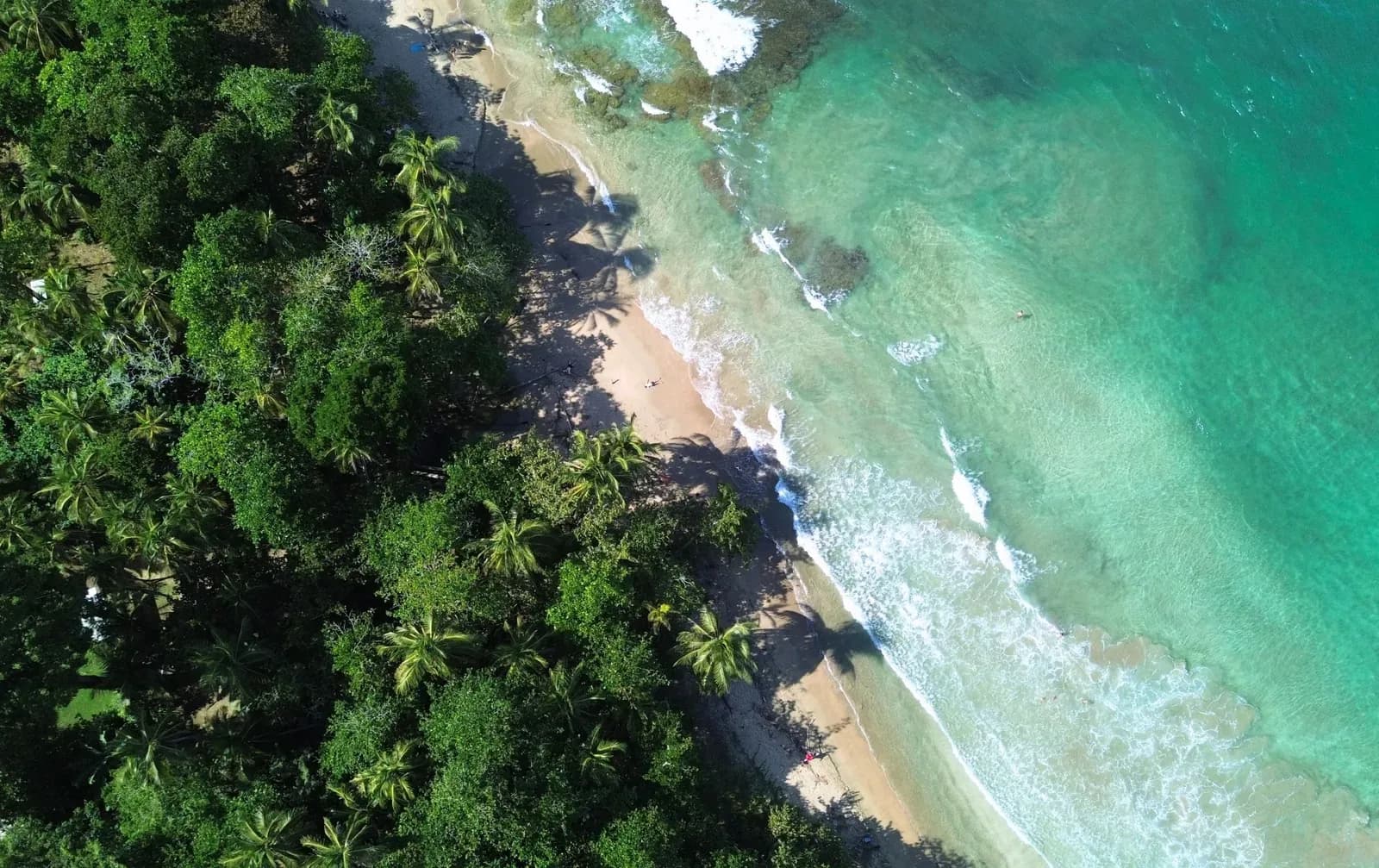
The stretch of coastline between Puerto Viejo and Manzanillo — about 15 kilometers — contains some of Costa Rica's most beautiful and varied beaches. The slow travel approach is to give each one its own day rather than trying to visit all of them in a single afternoon.
Playa Negra
Located just north of Puerto Viejo, Playa Negra is a quiet black-sand beach in a residential neighborhood. Ideal for long walks, calm swims, and sunsets — with a pace that feels genuinely off the main tourist circuit.
Cocles
Cocles is the surf beach of the coast — consistent waves, an active atmosphere, and a handful of good restaurants and beach bars nearby. Still relaxed by most standards, but with more energy than the beaches further south.
Playa Chiquita
Between Cocles and Punta Uva, Playa Chiquita is one of the quieter options on the stretch. Calm tidal pools, less foot traffic, and easy road access make it a favorite among longer-stay visitors looking for somewhere to return to.
Punta Uva
Punta Uva is consistently considered one of the most beautiful beaches in the region — a sheltered arc of turquoise water framed by coconut palms and rainforest. Swimming is clear and calm. The setting feels genuinely tropical in a way that photographs don't fully capture.
Manzanillo
At the end of the coastal road, Manzanillo is a small fishing village at the edge of the Gandoca-Manzanillo Wildlife Refuge. The reef makes it one of the best snorkeling spots on the coast, and the trail through the jungle offers wildlife and coastal views that are hard to find elsewhere.
For a detailed breakdown of each beach — what to expect, when to visit, and which is right for your style of travel — the beach guide to the Puerto Viejo coast covers the full stretch from Playa Negra to Manzanillo.
Experience Local Caribbean Culture
The Caribbean coast of Costa Rica has a cultural identity distinct from the rest of the country. The Afro-Caribbean community here has shaped the food, the music, and the rhythms of daily life in ways that are immediately noticeable and deeply present in the local restaurants, the architecture, and the community character of the town.
Spending a week or more in Puerto Viejo is enough time to move past the tourist-facing layer and find the small details that don't appear in travel guides. A bakery that opens early. A fruit vendor with the best pineapple on the coast. A reggae bar where locals outnumber visitors on a weeknight.
- Caribbean rice and beans cooked in coconut milk — worth trying at several different spots
- Fresh ceviche, seafood, and local empanadas at small neighborhood restaurants
- Local cafés with fruit juices made from tropical varieties not found in most supermarkets
- Community markets and small-scale vendors selling produce and handmade goods
- Live music at local venues, particularly on weekends
- The relaxed, genuine quality of a Caribbean coast that has resisted homogenization
Wildlife Happens Naturally
One of the rewards of a longer stay is the possibility of wildlife encounters that can't be scheduled. The southern Caribbean coast is home to a range of species, and spending more time in one place — especially in a home surrounded by trees and garden — increases the likelihood of seeing them.
Sloths are spotted regularly in the area, particularly moving through the tree canopy in the early morning. Howler and white-faced capuchin monkeys pass through gardens and forest edges. Toucans, hummingbirds, and dozens of other birds are active throughout the day. Poison dart frogs and blue morpho butterflies fill the undergrowth along jungle paths.
Wildlife sightings depend on location, season, and a fair amount of luck. The best approach is simply to spend time outdoors — on the porch in the morning, on a slow walk along a forest trail, sitting quietly in a garden at dusk. Longer stays make those moments more likely.
A Better Way to Enjoy Nature
Not every experience in Puerto Viejo needs to be organized as an activity. A morning beach walk at low tide. A swim as the sun goes down. Sitting on a terrace as tropical rain moves in from the ocean. Reading in a hammock with birds in the trees overhead. These things don't appear on a tour schedule, but they're often the memories that stay.
The Caribbean coast has a kind of natural richness that rewards unhurried attention. The more time you spend outside — and the less you structure that time — the more of it you actually absorb.
Working Remotely From Puerto Viejo
Puerto Viejo has attracted a growing number of travelers who combine remote work with an extended stay. The combination of Caribbean weather, time outdoors, and the natural rhythm of the region makes it easier to find the balance that's harder to maintain in a city. A morning of work, an afternoon at the beach, and a productive evening is a realistic daily structure here.
Private vacation rentals are generally better suited to a working stay than hotel rooms — more space, a stable environment, the ability to set up a proper workspace, and outdoor areas for breaks between working hours. Internet reliability varies between properties, so it's worth confirming connectivity before booking if that's a priority.
Why Vacation Homes Fit Slow Travel Better
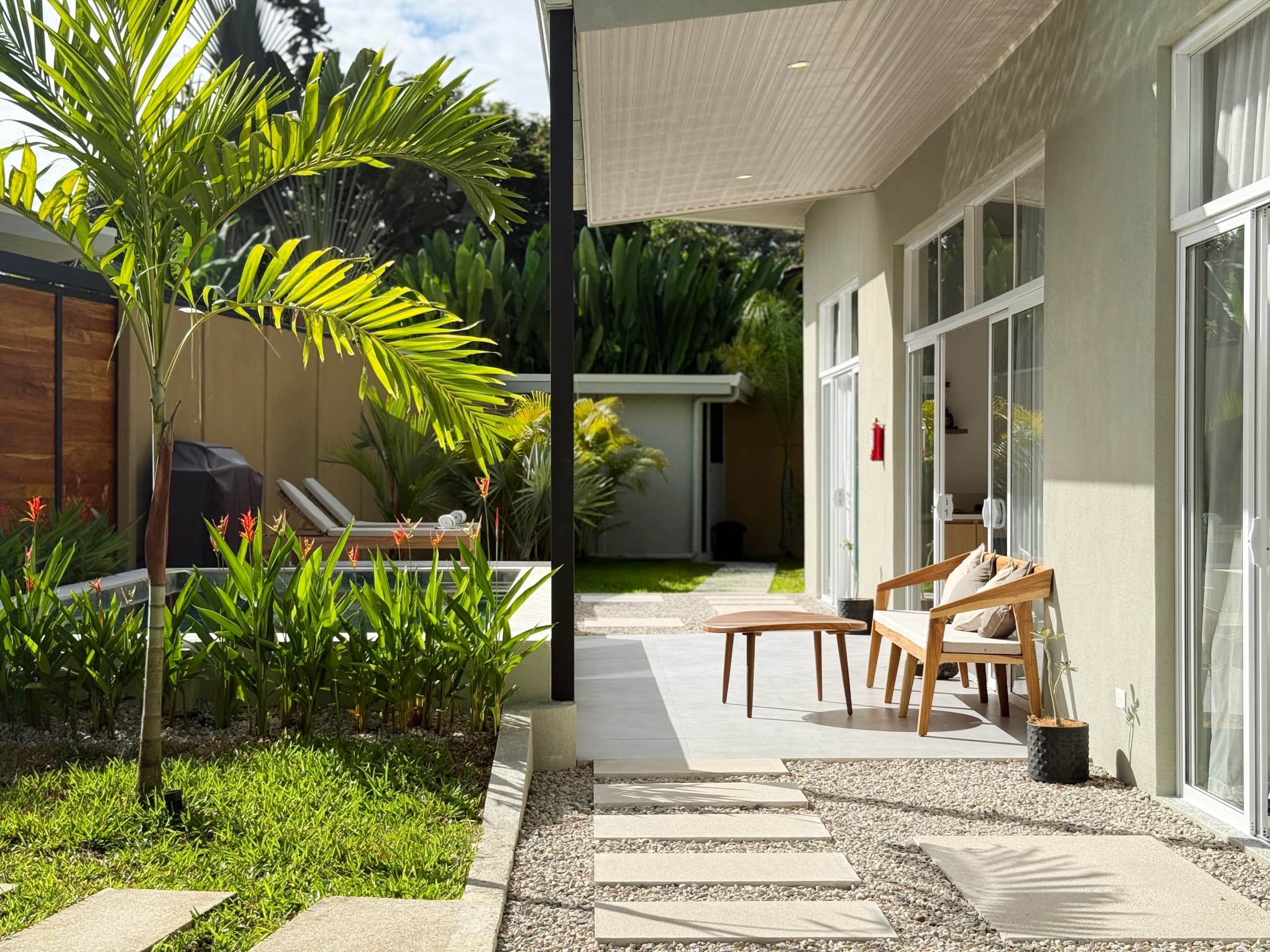
For a stay of five nights or more, the type of accommodation makes a genuine difference to how the trip feels. A private vacation home offers a level of space, flexibility, and everyday comfort that a hotel room — however well-appointed — rarely matches.
- A full kitchen — the ability to cook means lower food costs, more flexibility, and a more settled feeling
- Outdoor living areas, terraces, or garden space for time spent outside without leaving the property
- Multiple bedrooms that work for couples, families, or groups without feeling cramped
- Private pools where available — no scheduling, no sharing, no crowds
- Laundry access for longer stays without overpacking
- Arrival and departure flexibility that hotel checkout schedules don't always offer
Tucana Villa is a 2-bedroom house with a private pool set in a jungle garden in Playa Negra — close to the beach, with the kind of private outdoor space that makes a longer stay feel genuinely comfortable.
Hydrus Villa is a multi-unit property near Playa Negra, ideal for groups or families who want the flexibility of separate casitas — each with its own kitchen and terrace — while sharing a pool and garden.
La Gema del Caribe sits closest to Punta Uva beach, surrounded by tropical garden with a private pool. It's designed for the kind of relaxed, nature-centered stay that slow travel describes.
A Sample 7-Day Slow Travel Itinerary
This is a starting point, not a fixed plan. Some travelers follow something like this; others spend three days at the same beach and consider that a successful trip. Both approaches are valid.
| Day | Focus | Suggestions |
|---|---|---|
| 1 | Arrive and settle in | Unpack, explore the immediate area, find a local dinner spot, rest from travel |
| 2 | Playa Negra | Morning walk on the black-sand beach, local breakfast, afternoon at the house or pool |
| 3 | Puerto Viejo town | Explore the main street, visit local cafés, browse shops, rent a bicycle |
| 4 | Punta Uva | Swim in clear water, find shade under a palm tree, unhurried full-day beach visit |
| 5 | Manzanillo | Coastal hike or snorkel in the wildlife refuge, lunch at a local restaurant |
| 6 | Rest day | Use the pool, visit a market, cook dinner, walk at sunset — no itinerary |
| 7 | Favorite beach | Return to the beach you liked most — there's no reason to move on just yet |
Tips for Slow Travelers
- Pack light — you're staying in one place, not moving across a country
- Rent a bicycle for getting around town and to nearby beaches
- Accept that Caribbean weather changes quickly — flexibility beats frustration
- Shop at local markets and family-run stores when possible
- Leave a day or two with no plans — the best discoveries often happen unscheduled
- Take early morning walks before the heat builds up
- Try different local restaurants throughout the week rather than returning to the most-reviewed ones
- Slow down on your last day instead of squeezing in more activities
Why Staying Longer Can Be Better Value
A common assumption about longer stays is that they cost more. Many vacation rentals offer discounted nightly rates for stays of 7 nights or more — particularly in shoulder and low season. The per-night rate for a two-week booking is often noticeably lower than a short-stay reservation at the same property.
There are also indirect savings. Fewer transportation costs between destinations. No packing and unpacking every few days. Lower food expenses when a kitchen is available. Less money spent on organized tours because you're not trying to see everything in a short window. Slow travel is often not just more enjoyable — it can be more affordable.
Who Is Slow Travel Perfect For?
Slow travel in Puerto Viejo suits a range of travelers, but certain types tend to get the most from a longer stay.
- Couples who want genuine rest and time away from routine, not another high-activity trip
- Families with children who benefit from a stable base, outdoor space, and a flexible daily schedule
- Digital nomads who want a tropical backdrop for a few weeks of focused work
- Nature lovers and wildlife watchers who need time and patience, not a guided checklist
- Photographers who want the right light, the jungle, and the coast without being rushed
- Retirees and independent travelers who want an experience rather than an itinerary
Frequently Asked Questions
How many days should I spend in Puerto Viejo?
A minimum of five nights gives you enough time to visit several beaches and explore the town without feeling rushed. Seven to ten days is the sweet spot for most travelers — enough to develop a routine and see the coast at a relaxed pace. Two weeks or more is increasingly common for remote workers and anyone who wants to truly unwind.
Is Puerto Viejo good for slow travel?
It's one of the better destinations in Costa Rica for it. The town is small, the beaches are varied, the culture is distinct, and there isn't the same pressure to keep moving that exists in more heavily organized tourist circuits. Most travelers leave wishing they had stayed a few days longer.
Can I visit Puerto Viejo without renting a car?
Yes — many visitors do. Bicycles are a practical option for getting around town and reaching nearby beaches. Buses connect Puerto Viejo to Limón and San José. For Manzanillo and some of the more remote beaches, a car or taxi is more convenient, but it's not required for a full experience of the coast.
Is Puerto Viejo suitable for remote work?
It can be, depending on the accommodation. Private vacation rentals generally offer a better setup for working than hotels — more space, a stable environment, and outdoor areas for breaks. Internet reliability varies between properties, so it's worth checking before booking if connectivity is essential to your stay.
What's the best area to stay for a slow travel trip?
The area around Playa Negra — just north of the town center — is a popular choice for longer stays. It's quiet, close to the beach, and a short ride from restaurants and services in town. Properties between Puerto Viejo and Punta Uva offer more seclusion with easy access to several beaches. The right area depends on whether you want to be close to town or in a more natural setting.
Final Thoughts
Puerto Viejo de Talamanca rewards the traveler who gives it time. The beaches are more varied than they appear on a one-day visit. The culture takes a few days to reveal itself. The wildlife, the light, and the particular rhythm of the Caribbean coast — these things show up gradually, not on the first morning.
The best version of a trip here isn't the one that covers the most ground. It's the one that stays long enough in one place to feel, even briefly, like it belongs to you.
Looking for a place where you can truly slow down? Explore our private vacation homes near Puerto Viejo and discover the Caribbean coast at your own pace.
Looking for vacation rentals near Puerto Viejo?
Explore our homes for rent in Playa Negra — steps from the beach, with private pools and self check-in.
View vacation rentals in Puerto Viejo →